
It’s late. The last meeting ran over, dinner was whatever arrived fastest, and your thumb is already on the phone. Bas ek episode aur. The alarm is set for early tomorrow, you eat reasonably well, you even walk when you can, and still the waistline moves in only one direction.
I know this picture from the inside. In my corporate desk years I carried a belly, and poor sleep, high stress and messy food were all in the frame together. Regular workouts changed that for me later, but sleep is the piece we talk about least. So let’s look at the real sleeping less than 6 hours side effects, what the 2026 Workforce Health Index says about Indian desk workers, and a 14-day reset that fits a 9-to-7 job.
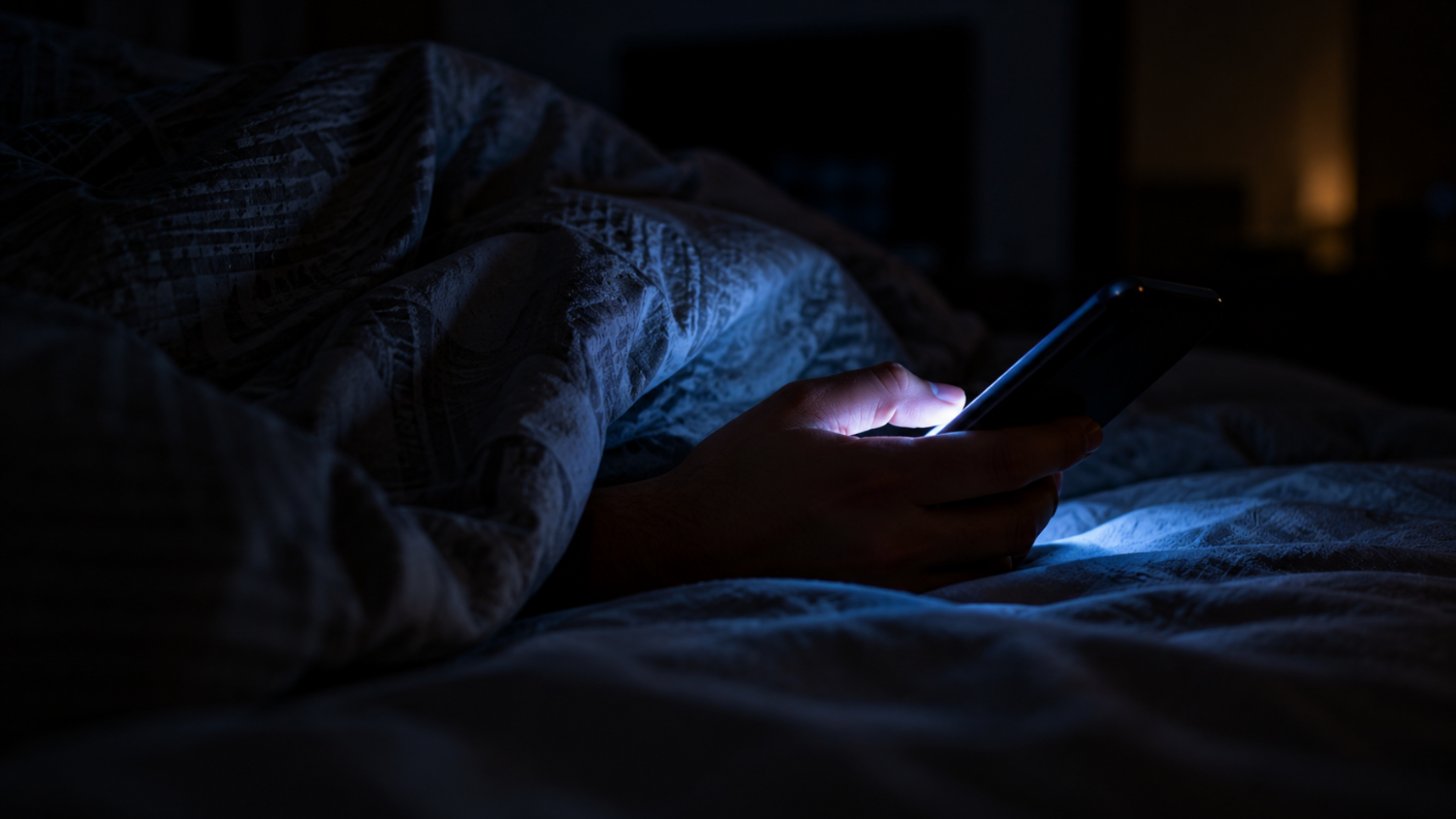
Table of Contents
Key Takeaways
- About three in ten survey respondents in the Workforce Health Index 2026 sleep under 6 hours, and four in ten report high stress.
- In small trials, short sleep raises hunger, lowers insulin sensitivity and shifts fat towards the belly, even when body weight barely moves.
- Feeling fine on 5.5 hours is not proof you are fine. People are poor judges of their own sleep loss.
- A 14-day reset built on a fixed wake time, a 2 pm caffeine cut-off, a screen wind-down, a morning walk and an earlier dinner is realistic for a 9-to-7 job.
- If you are still tired after two weeks of better sleep, or you snore heavily and wake unrefreshed, talk to a doctor.
What the Workforce Health Index 2026 found: about 3 in 10 sleep under 6 hours
The Workforce Health Index (WHI) by Loop Health was reported in late September and covered widely in the news. Here are the numbers that matter for this post, with the fine print most headlines skip.
| Measure | Figure | What it really means |
|---|---|---|
| Sleep under 6 hours | 30.7% | Survey respondents in the two shortest sleep bands (under 5 hours, or 5 to 6 hours). Self-reported. Loop’s own sleep page, based on 3,437 urban professionals, shows 27.3%, so treat the true figure as roughly 27 to 31%. Source |
| High stress in the past week | 40.4% | Also self-reported. Source |
| Blood-sugar dysfunction (employees) | 31.3% | HbA1c of 5.7% or above, which is mostly the prediabetes range, not diabetes. The report-wide figure including family members is 38.7%. |
| Low vitamin D | 81.4% | Lab results below 30 ng/mL. Source |
| Low vitamin B12 | 73.9% | Employees below 300 pg/mL. See the B12 page for the thresholds. |
One honest caveat before we go further. Loop is a group health insurer, the sleep and stress answers are self-reported, and the blood data comes from covered employees and family members who had health check-ups. This is not a representative sample of all Indian workers. Treat it as a useful signal, not a verdict.
The signal still fits the wider picture. A LocalCircles survey found 46% of Indians got under 6 hours of uninterrupted sleep over the past year, though it is an online poll, so read it as directional. In the WHI, desk-based work was the norm, and Mumbai showed the highest blood-sugar dysfunction rate among the metros at 46.8%.
A separate World Heart Day report from ekincare found that 58.5% of employees under 35 were flagged on cardiovascular risk markers (the report does not say which ones). That does not mean they have heart disease, and it is not a sleep study. It means a check-up flagged something, such as blood pressure, blood glucose or lipids. I include it only as context for how many desk workers are already carrying early warning signs.
Sleeping less than 6 hours side effects: the cortisol, appetite and insulin chain
Here is the plain version, without textbook padding. When you cut sleep, several things shift together, and each one nudges you towards storing fat around your middle.
1. Sleeping less than 6 hours side effects start with louder appetite signals
Hunger and fullness are managed by hormones, mainly ghrelin (hunger) and leptin (fullness). In sleep-restriction experiments, short nights tended to raise hunger and appetite, especially for high-carbohydrate foods. The leptin findings are not perfectly consistent across studies, but the direction on hunger is fairly steady. This is why the 4 pm samosa and the late-night snack feel almost impossible to skip after a bad night.
2. Sleeping less than 6 hours side effects include poorer sugar handling
In a small crossover trial of healthy young men, acute sleep restriction reduced insulin sensitivity. Your cells respond less to insulin, so your body needs more of it to move the same sugar. Higher insulin levels over time favour fat storage. This matters to a country where the WHI is already flagging so many HbA1c results in the prediabetes range.
3. Cortisol: a plausible link in sleeping less than 6 hours side effects
Cortisol is your stress hormone. It should be high in the morning and low at night. Reviews of the research describe raised evening cortisol after sleep restriction. I will say it carefully: cortisol is one plausible link, not a proven villain. The appetite and insulin evidence is stronger. But a body that is short on sleep, stressed by deadlines and running on tea and snacks is getting pushed in the same direction from three sides.
4. One of the sneakiest sleeping less than 6 hours side effects: fat shifts to the belly
This is the finding that connects to the belly fat many of you are fighting. In a 21-day inpatient trial of 12 healthy adults, a 4-hour sleep opportunity compared with 9 hours did not change total body fat much, but abdominal fat rose, and visceral fat area went up by about 11%. An earlier small pilot, described in this AHA abstract, pointed the same way.
Short sleep may not always change what you weigh, but it can change where you carry it. That is how someone who “eats okay” still sees the waist grow.
Now the limits. These studies are small and use extreme restriction, usually 4 hours. Real life at 5.5 hours will likely have a smaller effect. So the honest phrasing is that short sleep can contribute to belly fat. It does not single-handedly cause it. Diet, movement and ultra-processed food still count, which I covered in my belly fat guide. Think of this post as the “why this keeps happening even when you eat okay” follow-on.
“I function fine on 5.5 hours” is the lie a tired brain tells you
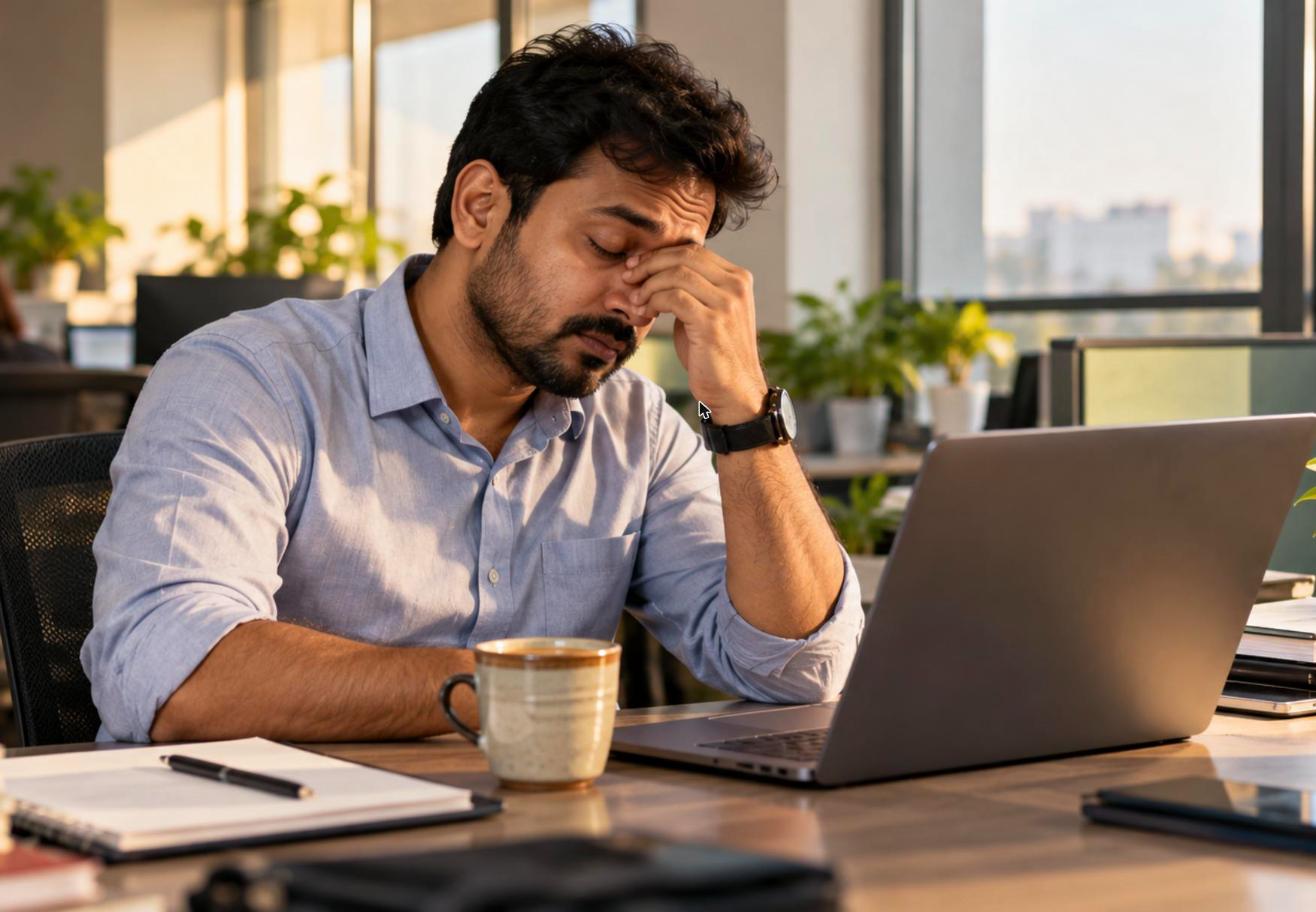
Main toh theek hoon. That belief is itself one of the sleeping less than 6 hours side effects. I hear this from a lot of people who work long hours, and it is the most natural thing to say after a few years of short nights. The problem is that you are the least reliable judge of your own sleep loss.
In one study, caffeine taken six hours before bed cost people more than an hour of sleep, and they did not feel the difference.
A good example is the caffeine research. In a small experiment, caffeine taken six hours before bed cut objectively measured sleep by more than an hour, and participants were not aware of the disturbance. If people cannot feel an hour of lost sleep, a feeling of being fine says very little. Some people may genuinely need less sleep than average. But “I’m used to it” and “I get by on three cups of chai” are not evidence of that.
| What you tell yourself | What is more likely true |
|---|---|
| I function fine on 5.5 hours. | You may have adapted to feeling tired. Feeling alert is not the same as sleeping enough. |
| Chai and coffee keep me sharp. | Caffeine can hide tiredness and also cut into the night’s sleep without you noticing. |
| I’ll catch up on Sunday. | A consistent wake time is the safer anchor than a big weekend lie-in. |
| My belly is just diet and age. | Diet and age matter, but short sleep can be a third driver. |
I’ll add something from my own side. I do not have a 9-to-7 now. I work from home, and I lived the desk and corporate life in the past. A few weeks into being sober I started feeling like a superman, and then I reminded myself, “I’m still human.” Rest is not a weakness. Since I quit drinking, which has now held for months, my sleep and energy have been better. I also train even on days my sleep was poor, but I don’t kid myself that a workout cancels a bad night.
Your 60-second sleep check (be honest, nobody is watching)
Before the plan, a quick mirror for sleeping less than 6 hours side effects. Count how many of these sound like you this week:
- You snooze the alarm more than once on most mornings.
- You need two or more cups of chai or coffee just to feel sharp before lunch.
- Your weekend wake-up is two hours or more later than on weekdays.
- You scroll your phone in bed for half an hour or more before sleeping.
- You hit a 4 pm slump and crave something sugary.
0 to 1: your habits look fairly steady, so use the plan below as a tune-up. 2 to 3: sleep is probably costing you something, and the first week of the plan will likely show it. 4 or 5: start tonight. This is a self-reflection tool, not a medical test, and it cannot diagnose anything.

A realistic 14-day reset for a 9-to-7 job
What follows is advice for you, not a diary of what I did. Treat 14 days as a trial, not a cure. Stack the habits instead of starting all five on Day 1, because that is how plans collapse by Wednesday.
Suppose your day is 9 to 7, you reach home around 8:30 pm, and you want to be in bed by about 11:30 pm and awake around 6:30 am. That gives you roughly seven hours in bed. Adjust the clock to your own life. If your trouble is mostly falling or staying asleep, my guide to sleep problems in office workers goes deeper, and sleep habits for working professionals covers the daily routine. The sequence is what matters.
Days 1 to 3: fix the wake time and cut off caffeine at 2 pm
- Fixed wake time. Same time every day, with at most 60 minutes of drift on weekends. This is the single highest-value habit because it anchors everything else.
- Caffeine cut-off at 2 pm. Chai counts. The 2 pm figure is a sensible margin, not a result from a study. It leaves about 9 hours before an 11:30 pm bedtime, well clear of the roughly six-hour window the research flags.
Days 4 to 7: add the 10-minute morning light walk
Step outside within the first hour of waking and walk for ten minutes. Morning daylight helps anchor your body clock. A balcony, a society garden or the lane outside will do. No gym needed.
Days 8 to 14: add the screen wind-down and the dinner rule
- 30-minute screen wind-down. Phone charging out of reach, lights dimmed, a shower, a book or some music. Bas ek episode aur is how half an hour becomes two.
- Heavy dinner at least 2.5 hours before bed. For an 11:30 pm bedtime, that means done by 9 pm. This is a practical rule, not a trial result. If you get home late, make dinner lighter instead of skipping it.
Throughout the two weeks, move bedtime 15 minutes earlier every few days until you reach about seven hours in bed. Chalta hai, kal se pakka is the sentence that kills most resets, so start with Day 1 tomorrow, not next Monday. Keep one line in mind about gadgets: do not make the plan depend on a ring or app sleep score, because consumer scores are not diagnostic. And please talk to a doctor before reaching for sleeping pills or melatonin gummies.
The Diwali variant
Diwali is on 8 November, and the festive late nights are about to begin. Card parties, family visits and sweets can wreck any plan. I can’t give you a study on festive nightcaps or late mithai, so take this as common sense. Keep your wake time even after a late night, allowing at most a 60-minute lie-in. Eat the heavy meal earlier in the evening and have the sweets as dessert after it. Keep the 2 pm caffeine rule on party days too.

When tiredness may not be only sleep: vitamin D, B12 and the basic panel
Alongside sleeping less than 6 hours side effects, the WHI found 81.4% of vitamin D results below 30 ng/mL and 73.9% of employee B12 results below 300 pg/mL. Those are conservative cut-offs, and the report is not causal evidence. Still, low levels can coexist with tiredness or make it worse. A small study of corporate employees also found low vitamin D and B12 to be common, though it was a small sample and should not be over-generalised.
So here is the sensible approach. Do the 14 days first. If you are still tired after about two weeks of better sleep, ask a doctor about a basic panel: HbA1c, vitamin D, B12 and a lipid profile. Test before you supplement, and avoid megadoses. The right dose is a doctor’s decision, not a WhatsApp forward’s.
The snoring and sleep apnoea note
Sometimes it is not habit at all. Obstructive sleep apnoea means your breathing repeatedly pauses or narrows during sleep. An older Delhi community study of adults aged 30 to 60 found it in 13.7% of the screened population, and an Indian study linked higher apnoea risk scores with larger waist measures. That is an association, and the two probably feed each other.
The red flags are unrefreshing sleep, choking feelings, repeated awakenings and daytime fatigue in a snorer. If you snore heavily, gasp at night, or wake unrefreshed after seven hours in bed, see a doctor sooner, whatever your 14-day plan shows. Diagnosis usually needs an overnight sleep study.
Frequently Asked Questions
Is 6 hours of sleep enough?
Most adult guidance points to seven hours or more, and the sleeping less than 6 hours side effects tend to build up quietly below that. Individuals vary, but self-assessment is unreliable, as the caffeine study shows. If you are tired, stressed and gaining belly fat, 6 hours is worth testing against 7.
Do sleeping less than 6 hours side effects really include belly fat?
Small trials show visceral fat rising under severe restriction, so it can contribute. It does not act alone, and the effect at 5.5 hours is likely smaller than at 4. Say “can contribute”, not “causes”.
Will fixing sleep alone shrink my waist?
Fixing the habits behind sleeping less than 6 hours side effects removes one driver. Food quality, movement and stress still matter. Think of sleep as the foundation, not the whole house. A short daily walk helps too, and my 45-minute sitting rule shows a simple way to start.
Is coffee before 2 pm fine?
For most people, yes. The strongest evidence involves a large caffeine dose six hours before bed, and sensitivity differs. If you still sleep badly, try moving the cut-off earlier.
The honest takeaway
The sleeping less than 6 hours side effects are quiet. You do not feel your insulin sensitivity drop or your appetite hormones shift. You just notice the waist, the tiredness and the 4 pm cravings, and blame yourself. The 2026 WHI is not a perfect dataset, but it shows how common short sleep and early metabolic warning signs are among urban desk workers. A 14-day reset will not fix everything. It will show you whether sleep was part of your problem, and if tiredness stays, you will know it is time to get checked.
I am not a doctor, and this is not medical advice. It is what I have learned and what the research suggests, shared peer to peer. For anything persistent, please see a qualified doctor.
If you truly read till here, I know you are serious about changing something.
Here is your challenge for tonight: pick one fixed wake-up time, set the alarm, and put it on a sticky note on your phone. Then tell me in the comments what time you chose, and which part of the 14-day reset feels hardest for your job. Let’s see who lasts the full two weeks.
Leave a comment below – I genuinely read them, and your question might also help someone else facing the same situation.

Abhishek Sikka writes for Indian working adults who want better health habits and safer money decisions. He shares practical lessons from his own lifestyle changes and years of market experience, with a focus on realistic routines, clear thinking, and long-term progress over extremes.
Discover more from
Subscribe to get the latest posts sent to your email.