
This BMI Calculator helps you calculate your Body Mass Index (BMI) instantly and understand whether your weight falls within a healthy range.
BMI Calculator
Calculate your Body Mass Index instantly
Your Result
Enter your details to calculate BMI
What is BMI?
Body Mass Index (BMI) is a simple measurement used to estimate whether your body weight is healthy compared to your height. It helps identify if a person is underweight, at a healthy weight, overweight, or obese.
According to the World Health Organization (WHO), BMI is a useful screening tool for weight-related health risks. BMI is widely used by doctors, fitness professionals, and health organizations because it provides a quick overview of body weight status. Although it does not directly measure body fat, it is considered a useful screening tool for general health assessment.
BMI can help you:
- Understand your weight category
- Track weight-related health risks
- Set realistic fitness goals
- Monitor progress during weight loss or muscle gain journeys
A healthy BMI is generally associated with lower risks of conditions such as heart disease, type 2 diabetes, high blood pressure, and obesity-related complications.
Maintaining a healthy BMI is only one part of overall wellness. Building sustainable daily routines can have an even greater long-term impact on your health. Read our guide on 4 Daily Habits to Rebuild Your Health: A Realistic Guide for Busy Indians.
What Is a BMI Calculator?
A BMI Calculator is a simple tool that estimates whether your weight is appropriate for your height. BMI stands for Body Mass Index and is calculated using your weight and height measurements.
Healthcare professionals often use BMI as a quick screening tool to identify whether a person falls into the underweight, normal weight, overweight, or obesity category.
While BMI does not directly measure body fat percentage, it provides a useful starting point for understanding overall health and weight-related risks.
How to Use the BMI Calculator
Using the BMI Calculator is simple:
- Enter your height.
- Enter your current weight.
- Click the Calculate BMI button.
- Review your BMI score and category.
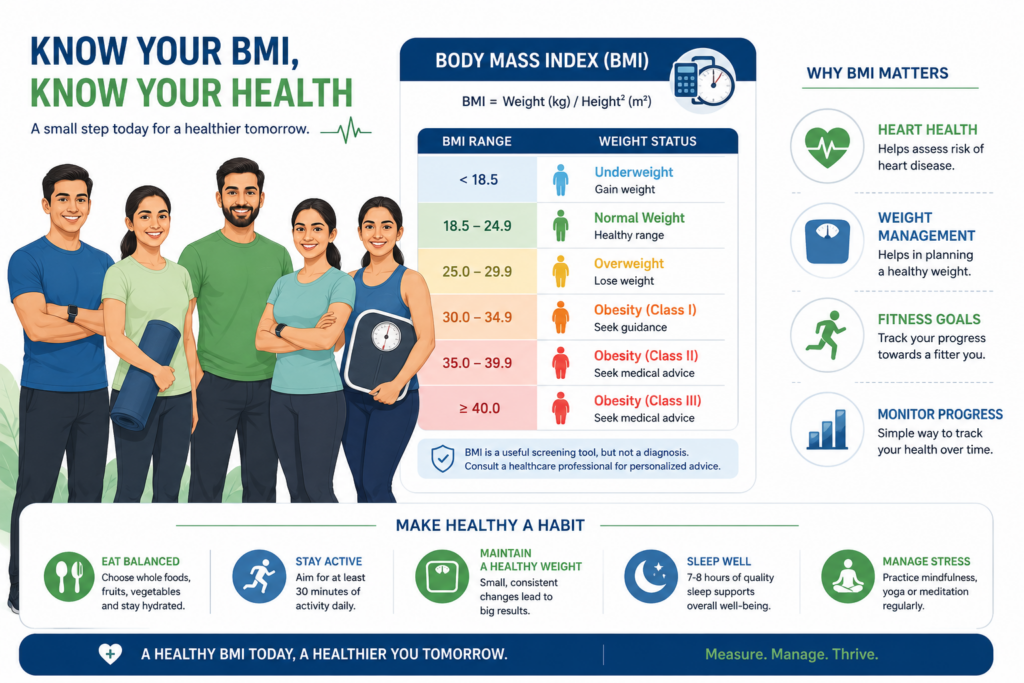
BMI calculator result can help you better understand your current weight status and whether lifestyle changes may be beneficial.
How BMI is Calculated
A BMI calculator can used to caculate BMI using your weight and height through a mathematical formula.
BMI Formula
For metric units:
BMI = \frac{Weight\ (kg)}{Height\ (m)^2}
For imperial units:
BMI = \frac{Weight\ (lbs) \times 703}{Height\ (in)^2}
Example Calculation
If a person weighs 70 kg and their height is 1.75 meters:
BMI = \frac{70}{1.75^2} \approx 22.9
This BMI falls within the healthy weight range.
BMI Calculator Categories Explained
BMI values are grouped into categories that help determine overall weight status.
| BMI Range | Category |
|---|---|
| Below 18.5 | Underweight |
| 18.5 – 24.9 | Healthy Weight |
| 25 – 29.9 | Overweight |
| 30 and above | Obesity |
These categories are designed as general guidelines and should not replace professional medical advice.
Underweight
Being underweight may indicate insufficient nutrition, low muscle mass, or certain health conditions. People in this category may experience low energy levels, weaker immunity, or nutritional deficiencies.
Healthy Weight
A BMI within the healthy range is generally associated with balanced body weight and lower health risks. Maintaining healthy eating habits and regular physical activity is important.
Overweight
This category suggests excess body weight compared to height. It may increase the risk of conditions like diabetes, high cholesterol, and hypertension.
Obesity
Obesity is linked to a higher risk of serious health complications including cardiovascular disease, sleep apnea, joint problems, and metabolic disorders.
Why BMI Matters
BMI can help you:
- Understand your weight category
- Track weight-related health risks
- Set realistic fitness goals
- Monitor progress during weight loss or muscle gain journeys
Although BMI is not a perfect measurement, it remains one of the most widely used health indicators across the world.
Limitations of BMI
BMI does not account for:
- Muscle mass
- Bone density
- Age
- Gender differences
- Body fat distribution
For example, athletes with high muscle mass may have a high BMI despite having low body fat levels.
BMI should therefore be used as a screening tool rather than a complete assessment of health.
Not a Complete Health Indicator
A person’s overall health also depends on factors such as:
- Diet quality
- Physical activity
- Sleep
- Stress levels
- Blood pressure
- Cholesterol and blood sugar levels
BMI should be used as a general guide rather than a final diagnosis.
Tips to Maintain Healthy Weight
Maintaining a healthy weight involves long-term lifestyle habits rather than short-term dieting.
Eat Balanced Meals
Focus on:
- Protein-rich foods
- Whole grains
- Fruits and vegetables
- Healthy fats
- Adequate hydration
Avoid excessive processed foods, sugary drinks, and overeating.
Stay Physically Active
Regular exercise helps manage body weight and improves overall fitness. Aim for:
- Strength training
- Walking or cardio
- Daily movement and activity
Prioritize Sleep
Poor sleep can affect hunger hormones, energy levels, and recovery. Consistent quality sleep supports better weight management.
Manage Stress
Chronic stress may lead to emotional eating and hormonal imbalance. Practices like meditation, exercise, and proper relaxation can help.
Track Progress Consistently
Monitor your:
- Weight
- Energy levels
- Strength
- Waist measurements
- Overall health habits
Small consistent improvements often produce better long-term results.
Just as a healthy body needs protection from unexpected health challenges, your finances need protection from unexpected expenses. Learn why every Indian should build an emergency fund before investing in our guide on Emergency Fund for Indians.
Frequently Asked Questions About BMI
Is BMI accurate?
BMI is reasonably accurate for most people as a general screening tool, but it does not directly measure body fat or overall fitness.
What is a healthy BMI range?
A BMI between 18.5 and 24.9 is generally considered healthy for most adults.
Can athletes have high BMI?
Yes. Athletes may have higher BMI due to increased muscle mass rather than excess fat.
Does BMI work for everyone?
BMI may be less accurate for:
- Athletes
- Elderly individuals
- Pregnant women
- People with very high muscle mass
How often should I check my BMI?
Checking BMI once every few weeks or monthly is usually enough for tracking general progress.
Is BMI enough to measure health?
No. BMI should be combined with other indicators such as waist size, fitness level, diet quality, and medical assessments for a better understanding of health.