
Table of Contents
The worst part of a money mistake is rarely the money. It is the silence around it. I know that silence. After one bad stretch in the market, I could not tell my wife or my friends. They would have said stop, and in their place I would have said the same: ‘this is gambling.’ So I carried it alone.
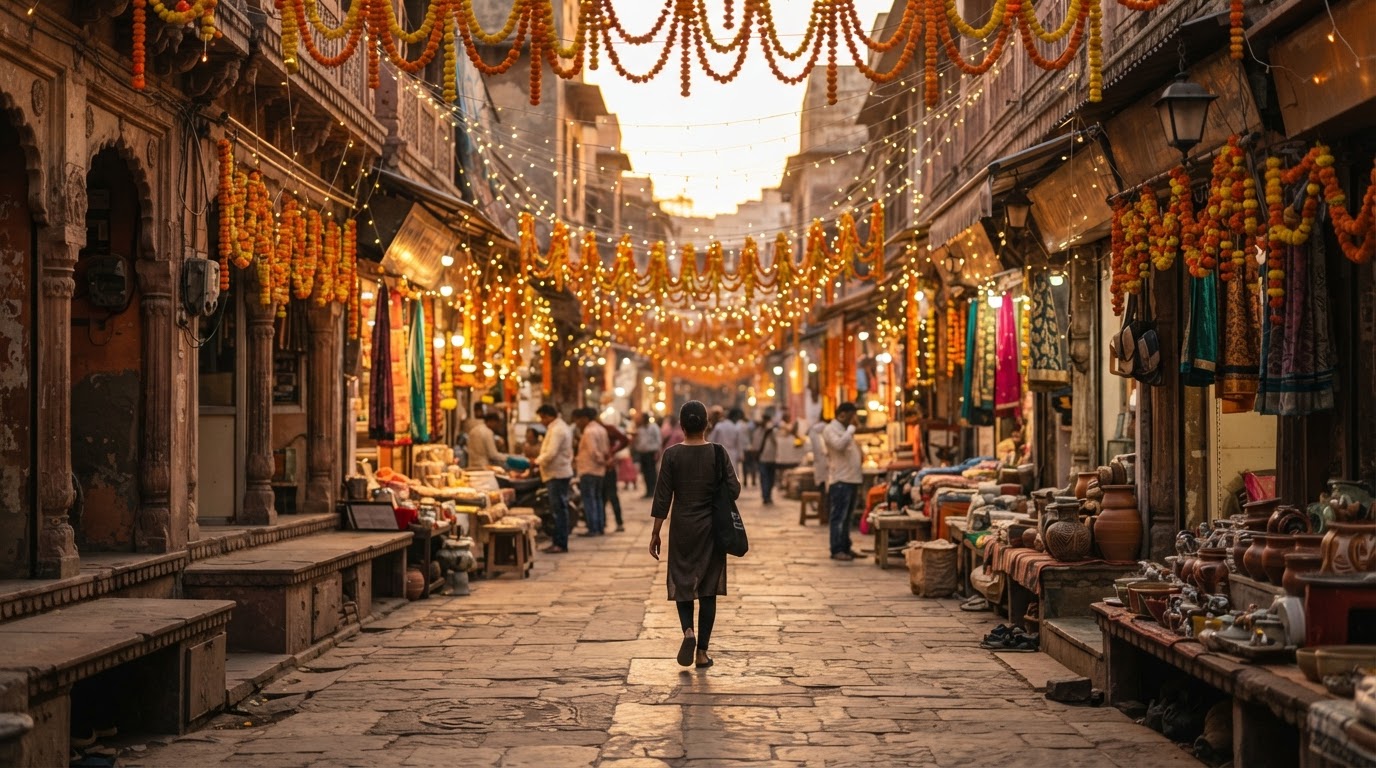
A card balance grows in exactly that kind of silence. One more EMI, one more ‘chalta hai, next month dekh lenge’, and the number nobody has said aloud keeps compounding. The festive sales opened this week, so this is the numbers-first version of how to clear credit card debt in india: a 90-day plan that puts your Dussehra and Diwali spending inside the plan instead of on top of it.
Key Takeaways
- Measure your EMIs against in-hand salary. Around 30-40% is a common red-flag zone, and a new loan taken to pay an old EMI is a red flag at any ratio.
- No-cost EMI is not free. In my illustration, a Rs 60,000 phone cost about Rs 3,200 more than the cash price, roughly 19% a year.
- A revolving card balance at 36-42% a year beats almost any return you can earn, so pay it off before you invest in anything else.
- Avalanche (highest rate first) saves the most interest, and snowball (smallest balance first) gives early wins. Pick the one you will actually follow.
- Be realistic: clearing everything before Diwali is unlikely for most people. Stop the bleeding now and clear it within 90 days.
The sale season is built to make ‘yes’ easy
Amazon’s Great Indian Festival and Flipkart’s Big Billion Days started around 8-9 October, and other platforms followed within a day. Card discounts and no-cost EMI sit right at checkout. I spent part of my call-centre years in a domestic credit-card sales process, so I have been on the selling side of a ‘yes’ that is made easy. ‘Sale khatam ho jayegi, abhi le lo’ is a sales line, not a financial plan.
Some context, with caveats. Business Today reported Expert Panel data showing about 40% of borrowers using fresh loans or cards to service existing EMIs. That is not a national statistic. Those are people who approached a debt-resolution platform, so the sample is self-selected and already stressed, and the firm sells debt-resolution services.
Treat it as a directional signal. Related coverage says that in the same pool, EMIs equal or nearly equal monthly family income for about 60% of borrowers. As for the claim that 60-70% of festive electronics are bought on EMI, reports suggest something like it, but I could not trace a primary source. I would not bet a decision on it.
What I can say is that the pattern is plain, and it is rarely about willpower. It is about the ratio between what comes in and what is already committed.
Step 1: the take-home pay test
Add up every monthly EMI and card minimum, and divide by your in-hand salary: what lands in the bank after TDS, EPF and other deductions. Do not use CTC. Include your home loan if you have one, then run a stricter second version without it. A ratio of about 30-40% is a common planning rule of thumb, not an RBI rule. Lenders apply their own limits, often higher, and that is how people end up ‘eligible’ for loans that hurt.
Suppose someone takes home Rs 1,00,000 a month. This is an imagined example for the maths:
| Obligation | Rs per month |
|---|---|
| Car loan | 12,500 |
| Personal loan | 8,000 |
| Phone no-cost EMI | 4,000 |
| Laptop no-cost EMI | 3,500 |
| Card minimum dues | 5,000 |
| Total | 33,000 (33%) |
Now add a Rs 60,000 TV on a 12-month EMI, about Rs 5,000 a month. The total becomes Rs 38,000, or 38%. That leaves Rs 62,000 for rent, food, school fees, insurance and every other goal. Nobody decided to be at 38%. It crept up one ‘bas ek EMI hi toh hai’ at a time.
Two red flags matter whatever your ratio says: you are borrowing to pay an old EMI, or your card balance is no lower than it was six months ago despite regular payments. On the tax angle, as far as I understand, interest on card or consumption loans earns no deduction, so do not build any plan on one. Check with a qualified professional. The honest ‘tax’ lever here is the in-hand figure itself.
What no-cost EMI really costs
The bank still charges interest. The seller subsidises it, so the sticker price looks interest-free. But as the Kotak MF explainer and others describe, three things still reach your wallet: the interest is baked into the price, GST at 18% applies on the interest or the processing fee, and you often give up the cash discount.
Here is my illustration, not a quote from any bank. A Rs 60,000 phone on a 6-month no-cost EMI, with the bank’s hidden rate at 15% a year. The cash price with a card discount is Rs 57,500.
| Line | Pay upfront | 6-month no-cost EMI |
|---|---|---|
| Price | Rs 57,500 | Rs 60,000 |
| Interest (about Rs 2,652) | None | Subsidised by seller |
| GST on that interest | None | about Rs 477 |
| Processing fee + GST | None | about Rs 235 |
| You pay | Rs 57,500 | about Rs 60,712 |
That is roughly Rs 3,200 extra for six months, about 19% a year on the money you financed. It is far cheaper than a revolving card, but it is not free. And if you would not buy the phone at the cash price, the real cost is the full Rs 60,000.
Do not overclaim in the other direction either. A Zerodha Varsity writer worked through one case where the net EMI discount was about Rs 3,500 after GST and fees, while paying upfront gave Rs 4,750. Offers differ. Processing fees vary by issuer, and bank discounts have minimum cart values and caps. So compare both checkout totals line by line before you tap. Early closure may not refund the GST and fee already billed in month one, so check your issuer’s terms.
The minimum-due trap
Many Indian cards charge about 3-3.75% a month on revolving balances, which is roughly 36-45% a year, plus 18% GST on the interest. Rates vary by card: SBI Card lists up to 3.5% a month on unsecured cards, while some premium or secured cards charge less, so check your own statement (DebtZen’s breakdown is one example). On a Rs 1 lakh balance at 3.5%, the monthly interest alone is about Rs 3,500. A minimum payment of Rs 5,000 therefore reduces principal by only about Rs 1,500, as this calculator piece also shows.
Pay a fixed Rs 5,000 a month on a Rs 1 lakh balance with no new spends, and by my calculation it takes about 35 months and about Rs 1.75 lakh in total, before GST and fees. The minimum due protects you from a late fee. It does not protect you from the interest.
RBI’s card rules now require issuers to tell customers about the consequences of paying only the minimum, as this summary of the guidelines notes. Read that line on your statement as information, not as a pass. Two more points. Interest accrues daily, so pay extra right after your salary credits instead of waiting for the due date. And sources disagree on whether part-payment means interest on the entire original balance or only on the remainder, so check your card’s MITC (Most Important Terms and Conditions).

Say the number out loud
Back to the silence. In my first full year in the market I was profitable most months. Then came one monthly expiry in January. The market kept rising, I kept selling calls, and I lost everything I had made that entire year. I was the only earner in a family of five, and I told nobody.
That was a trading loss, not a card bill, and I am not comparing the two. But the shape is the same: one decision repeated while the number climbs, and nobody in the room to say stop. I could read the market well. What I lacked was discipline, so I rebuilt that slowly. I worked on myself, I started learning again, and I listened to what the market was saying instead of fighting it. Rules beat talent, every time.
A statement is the same kind of message. Write down every balance, rate and due date on one page, and tell one person you trust. It took me a long time to learn that this is not weakness. It is the first rule of the plan. I also never invest borrowed money, so a sudden problem cannot force a sale. A card balance is borrowed money that someone else is investing for 42%.
How to clear credit card debt in India: avalanche or snowball
Once the list exists, you need an order. Avalanche means paying the highest rate first, which saves the most interest. Snowball means paying the smallest balance first, which gives you early wins. When balances are small and rates are close, the gap is tiny. When rates and balances differ a lot, avalanche wins more clearly.
Here is an imagined example. Card A is Rs 60,000 at 3.5% a month. Card B is Rs 30,000 at 3.0% a month. The card budget is Rs 25,000 a month with no new card spends, plus an optional Diwali bonus of Rs 30,000 in month two.
| Scenario | Avalanche | Snowball |
|---|---|---|
| Interest paid in 90 days (with bonus) | about Rs 5,700 | about Rs 5,900 |
| Cleared by day 90 (with bonus) | Yes, about Rs 9,300 left over in month 3 | Yes, about Rs 9,100 left over |
| Without the bonus | Card A cleared in month 3, about Rs 21,700 left on Card B, cleared in month 4 | Not computed |
The difference is only about Rs 200 here, so if snowball keeps you going, choose snowball. The best method is the one you will not abandon in week three. Keep paying minimums on your personal loan, car loan, no-cost EMIs and BNPL dues. Do not prepay low-rate loans while 36-42% balances exist.
The 90-day calendar
- Day 1 (about 30 minutes): list every debt with its balance, APR, minimum, due date, and whether it is fixed or floating. Pull your credit report. Set auto-debit for the minimum on every card, so a missed payment never happens, and make your extra payment on top.
- Days 1-7: remove saved cards from shopping apps for the sale period and set your spending cap (below).
- Days 8-45: pay the extra amount on salary day, because interest accrues daily. Buy only what was already budgeted, from cash.
- Days 46-90: keep Diwali spending inside the cap. Put any bonus on the highest-APR balance first, because that is the fastest way to clear credit card debt in India.
- Day 90: that is how to clear credit card debt in India, one step at a time. Re-run the ratio from Step 1. If your credit card debt is gone, restart investing and rebuild your emergency fund.
If the cash simply is not there, ask your issuer to convert the balance into an EMI, and check the rate, fee, GST and foreclosure terms first. A personal loan or balance transfer at 13-18% can beat 42%, but only if the card is frozen afterwards. Otherwise it only creates room to spend again. If you cannot pay at all, call the issuer before the due date and ask about hardship options. Document everything.
RBI rules that work in your favour
- Prepayment: RBI’s prepayment-charge directions bar charges on non-business floating-rate loans to individuals sanctioned or renewed from 1 January 2026. The catch is that most personal loans and card EMIs are fixed-rate, and fixed-rate loans can still carry foreclosure charges. Check your sanction letter.
- Key Fact Statement: RBI expects lenders to give retail borrowers a Key Fact Statement showing the APR and all fees. I have not re-read the circular for this post, so check the KFS you were given before you sign or convert anything.
- Credit limit: your sanctioned card limit should not be breached without your explicit consent, so say no to limit hikes you did not ask for. This explainer covers the 2026 changes.
- Escalation: if the bank does not resolve a charge dispute, the RBI Integrated Ombudsman is the route, as this guide notes.
A short note on the amended card rules
The RBI amendment dated 27 April 2026 says issuers may report an account as past due, or levy late charges, only once it stays past due for more than three days. Late charges apply only to the outstanding amount after the due date, not the full amount due. RBI’s own notice says these amendments come into force from 1 April 2027, and several explainers repeat that date, so do not count on this yet.
Some explainers describe a three-day window as already in force, and an older 2015 RBI circular already had a version of it. Verify with your own issuer. Either way, do not treat three days as a plan. It is not an extension of the deadline, and interest still accrues from the due date.
Pause the SIP, but keep the floor
I run SIPs and have for years, so this is not a post against investing. But this is a judgement call and not a regulation: while any debt costing above roughly 18% a year is outstanding, pause new SIPs and send that money to the card. A guaranteed 36-42% cost beats uncertain equity returns. Nobody can promise you a return, and I certainly do not.
There are two exceptions. Keep any employer EPF or NPS match, and keep a minimum emergency fund. My suggestion, not a sourced figure, is at least one month of expenses before aggressive payoff. Without it, one bad month sends you straight back to the card. When the card APR debt is cleared, restart with the steps in how to start a SIP in India.
Pre-Dussehra and Diwali: a cap and a 48-hour rule
Set one cap, and make it two tests at once. Festive spending should not exceed cash already earmarked, meaning a bonus that has been received, not expected. And it should not push your EMI ratio above about 30%.
For any purchase above a threshold you choose, say Rs 10,000, use the 48-hour rule. Put it in the cart and wait two days. Then compare the cash price, the no-cost EMI total and the real discount. Use a card only for things you will pay in full at the next statement. Money mattered to me early because I saw what small things cost, and the festive season is when small things quietly stack into big ones. I try to stay neutral: never too excited, never too stressed. A sale is a sale, and another one will come.
Traps to avoid while you do this
- Paying one card with another, or using cash advances, which are usually costly. Check current fees.
- Stacking no-cost EMIs. Each is a fixed monthly outgo, and some issuers block the card limit against the principal, so check yours.
- Taking a longer tenure for a bigger discount. The discount grows, but so does the debt.
- Debt-settlement or ‘credit repair’ firms, and fake ‘RBI waiver’ calls. Never share OTPs or pay ‘clearance fees’.
- Breaking EPF or PPF to clear cards. Look at low-yield savings first. If you redeem equity funds, check the current tax rules on capital gains, though at a 36-42% cost of debt that tax is usually small by comparison.
Frequently Asked Questions
Is no-cost EMI really free?
No. The bank charges interest and the seller subsidises it, but GST and fees can still fall on you, and you may lose a cash discount. Compare both checkout totals before you decide.
Should I close my card after paying it off?
Not necessarily. Closing a card reduces your available credit and can raise your utilisation. A better move is to freeze spending on it and keep it for genuine emergencies.
Can I prepay my personal loan without a penalty?
Only if it is a floating-rate loan sanctioned or renewed from 1 January 2026, or if your sanction letter allows it. Most personal loans are fixed-rate, so read the agreement first.
Is debt consolidation a good idea?
Yes, if the new rate is much lower, total fees are small and you stop using the cards. No, if it only gives you room to spend again.
The honest takeaway
You will not clear everything before Diwali, and you do not have to. What you can do this week is list every balance, switch on autopay, cap your festive spending and put your first extra payment on the highest rate. That is how to clear credit card debt in india: one boring order of payments, repeated for 90 days, with someone you trust knowing the number. I wish I had said mine aloud sooner.
Disclaimer: This article is for education only and is not personalised financial, tax or legal advice. I am not a licensed adviser. Interest rates, fees and RBI rules change and differ by issuer and lender. Verify details in your card’s MITC, your loan sanction letter and on rbi.org.in, or consult a SEBI-registered investment adviser or qualified professional before acting. All worked examples are my own illustrative calculations.
If you truly read till here, I know you are serious about changing something.
Tell me in the comments: which part of this feels most relevant or confusing for your current situation, and what is one step you are taking this month?
Leave a comment below – I genuinely read them, and your question might also help someone else facing the same situation.

Abhishek Sikka writes for Indian working adults who want better health habits and safer money decisions. He shares practical lessons from his own lifestyle changes and years of market experience, with a focus on realistic routines, clear thinking, and long-term progress over extremes.
Discover more from
Subscribe to get the latest posts sent to your email.