
Table of Contents
It is late September. You step out of a shared auto or navigate a crowded metro station, drenched in sweat from the 35-degree heat and brutal late-monsoon humidity. Ten minutes later, you are sitting at your desk in an office where the AC is blasting at a freezing 18 degrees. By 4 PM, your head is throbbing, your eyes are dry, and you still have three internal review meetings before a late-night call with the US team. Then your manager pings you about the upcoming Diwali campaign targets.
Sound familiar? If you are searching for exactly how to avoid burnout in indian corporate jobs right now, you are not alone. This specific window—late monsoon bleeding into autumn—is a perfect storm for working professionals in cities like Delhi, Mumbai, Bengaluru, and Hyderabad. We are caught between extreme weather, Q2 performance pressures, and the chaotic ramp-up to the festive season. The exhaustion you feel is not a lack of willpower; it is a physiological and systemic overload.
Key Takeaways
- Over 59% of Indian employees currently report workplace burnout symptoms, making it a systemic issue, not a personal failure.
- The combination of outdoor heat, cold office AC, and mild dehydration severely impairs cognitive function and working memory.
- Surviving the Q2 and festive rush requires strict micro-habits: timed hydration, screen breaks, and hard cut-offs for late-night calls.
- Using your commute for mental recovery instead of doomscrolling is critical for long-term energy management.
- Setting polite but firm boundaries with managers using structured scripts can protect your health without hurting your career.
The September Trap: Why Exhaustion Peaks Now
We often think of burnout as a purely emotional or workload-driven issue. But in the Indian corporate context, it is deeply environmental. Recent data paints a grim picture of our work culture. A major McKinsey Health Institute survey found that 59% of Indian respondents showed workplace burnout symptoms, the highest among the countries they studied. Another extensive review of workplace stress in Indian environments echoed this, noting that burnout has become a national concern affecting nearly 60% of the workforce.
Why does it hit so hard right now? Because we are dealing with a multi-hit scenario. First, the physical toll. The late monsoon heat in India is incredibly draining. Second, the corporate calendar. September and October mean Q2 closings, half-yearly appraisals, and the launch of massive festive campaigns. Third, the hybrid work illusion. Microsoft India data shows 57% of employees feel overworked, with many citing digital exhaustion from blurred home-office boundaries. We are commuting in the heat, freezing in the office, and then working from our dining tables until midnight.
The Hidden Culprit: Heat, Dehydration, and Your Brain
Before we talk about managing your manager, we have to talk about managing your body. The contrast between a hot, humid Indian commute and a dry, cold office AC environment silently wrecks your cognitive performance.
When you sweat during your commute and then sit in an AC room that strips moisture from the air, you become dehydrated much faster than you realize. A large occupational study revealed that around 70% of workers experienced mild dehydration (about 2% body mass loss), which significantly aggravated the impact of heat on their cognitive and motor tasks. Even mild dehydration slows your reaction time, makes you irritable, and increases mistakes in complex tasks like financial modelling or coding.
Furthermore, a 2023 study on seasonal influences found that working memory is significantly worse in summer conditions compared to winter. When you force a dehydrated, heat-strained brain to stare at a screen for 10 hours, mental fatigue accumulates at double the normal speed. You are not just tired; your brain is literally running out of coolant.
Common Traps We Fall Into (And Why They Fail)

When figuring out how to avoid burnout in indian corporate jobs, we often rely on bad advice or toxic workplace myths. Here is a breakdown of what we get wrong.
| The Myth / Trap | The Ground Reality |
|---|---|
| “I will just push hard now and rest during the Diwali holidays.” | Burnout is cumulative. A few days off cannot reverse months of chronic sleep deprivation and cortisol overload. The post-festive backlog usually ruins the break anyway. |
| “I just need more coffee and energy drinks to get through the day.” | Caffeine masks fatigue but acts as a diuretic, worsening the dehydration caused by the heat and office AC. It also destroys your deep sleep architecture. |
| “I must reply to all Slack/Teams messages within 5 minutes to look dedicated.” | Constant context-switching drains your already strained cognitive battery. Over 62% of Indian employees report burnout, heavily linked to this “always-on” culture. |
| “I will unwind by scrolling Instagram on my 90-minute metro ride home.” | Doomscrolling exposes your brain to constant novelty, comparison, and stress, completely removing your only window for mental recovery between office and home. |
How To Avoid Burnout In Indian Corporate Jobs: A 4-Step Framework
You do not need a three-week yoga retreat in Rishikesh to fix this. You need low-friction micro-habits that fit into a chaotic 10-hour workday. Here is a practical framework designed for the Indian salaried professional.
Step 1: Stabilise Your Body in the Heat (Hydration + AC Management)
Your first line of defense is physical. Stop treating your body like a machine that can ignore the weather.
- The Hydration Baseline: Do not aim for a massive 3-litre target that you forget until 6 PM. Keep a 500 ml bottle visible on your desk. Aim for small, frequent sips every hour. If you have a brutal commute in cities like Chennai or Mumbai, add one lightly salted drink or ORS in the afternoon. Research shows that electrolyte-fortified fluids help maintain cognitive performance in hot conditions better than plain water alone.
- AC Strategy: Do not sit directly under the AC vent. Keep a light jacket at your desk. When moving from the 35-degree outdoors to the 18-degree indoors, spend 2-3 minutes in a transition space like the lobby. This simple act reduces the vascular shock that triggers tension headaches.
Step 2: Micro-Breaks for Screen Hygiene
When you are under pressure to deliver Q2 reports, taking a 30-minute walk is impossible. Instead, use micro-breaks. Every 45 to 60 minutes, take a 60-second pause. Look 20 feet away from your screen. Stand up, stretch your neck, and sit back down. Studies on heat strain and cognitive function indicate that brief, structured pauses significantly reduce error rates and mental fatigue. Batch your email checking to every 45 minutes rather than reacting to every single notification ping.
Step 3: Boundary Scripts for Late-Night Calls
If you work in IT, BFSI, or consulting, late-night calls with US or Europe clients are a reality. But they do not have to ruin your life. You must establish a “hard stop” window and negotiate compensation for your time. Here are polite, professional scripts you can use with your managers:
- For late-night expectations: “I am happy to support the US client call tonight. To stay effective and avoid burning out, can we treat this as an exception and adjust my login time to 11 AM tomorrow?”
- For non-urgent after-hours pings: “I have seen your message and will pick this up first thing tomorrow morning. If it is a critical escalation for tonight, please give me a call.”
Setting boundaries is much easier when you are not operating out of financial fear. This is exactly why I constantly advise building a solid emergency fund for Indians. Having six months of expenses saved gives you the psychological safety to push back against toxic demands.
Step 4: Use Your Commute for Recovery
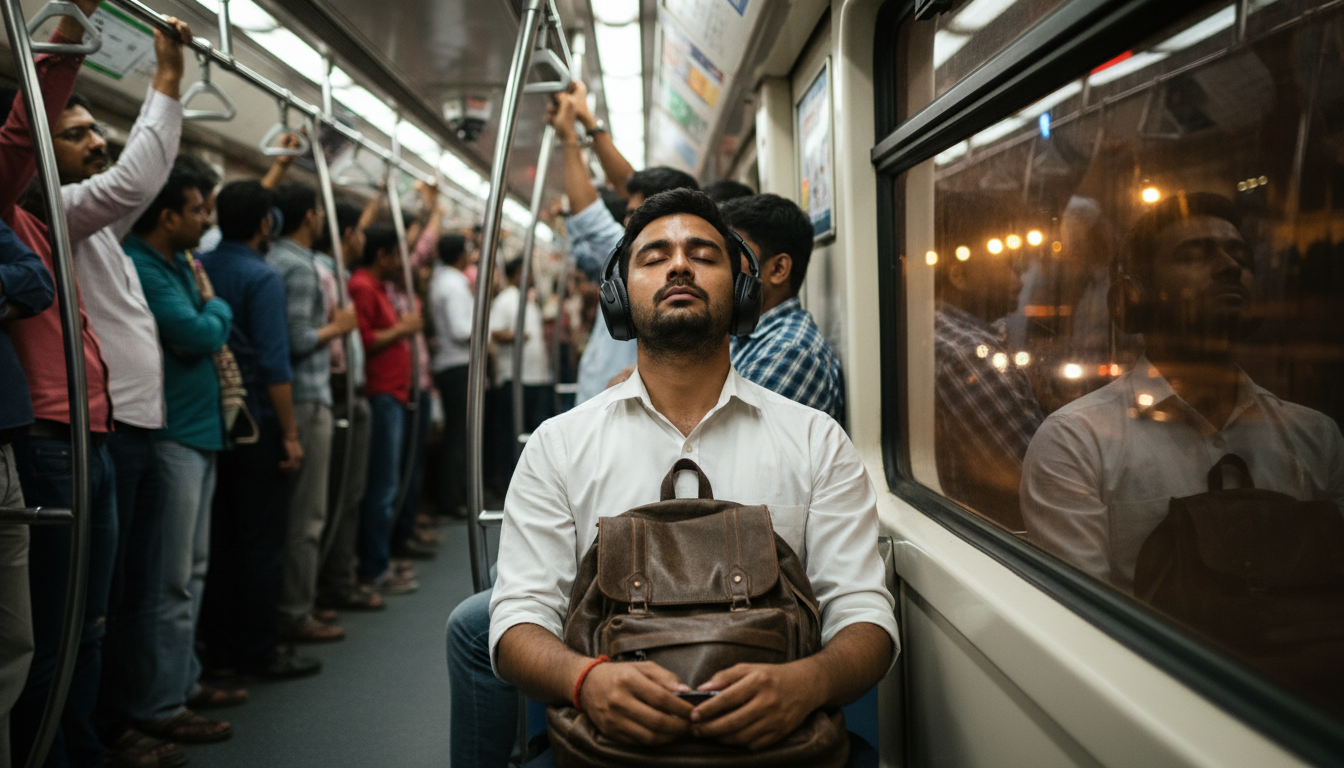
Indian commutes are notoriously long. If you spend 90 minutes in traffic or on a train, that is a massive chunk of your day. Stop using this time for doomscrolling. Turn your commute into a recovery zone. Listen to a non-fiction audiobook, play calming music, or simply close your eyes and practice slow breathing. If you drive, use the time to decompress in silence rather than taking more work calls.
“Burnout does not happen because you worked hard for a week. It happens because you worked hard for months without ever giving your nervous system a signal that it is safe to rest.”

Navigating Festive Office Events Without Crashing
As October approaches, the office calendar fills up with Diwali townhalls, team dinners, and ethnic days. While these are meant to be fun, they often add to the exhaustion. You end up eating heavy, sugary foods late at night, disrupting your sleep, and still having to log in at 9 AM the next day.
Pick your battles. Choose one or two key events to attend fully. For the rest, practice the “show face and leave” strategy. Tell your team, “I will join for the main dinner, but I have to head out by 9:30 PM to prepare for early calls tomorrow.” Protect your sleep architecture at all costs during the festive rush.
5 Signs Your Fatigue Is Turning Into Burnout
How do you know if you have crossed the line from normal tiredness to clinical burnout? Watch for these five signs:
- Unrefreshing Sleep: You sleep for 8 hours but wake up feeling like you were hit by a truck.
- Cognitive Decline: You are making silly typos, forgetting attachments in emails, and losing your train of thought in meetings. Research on heat strain shows a direct link to reduced cognitive accuracy.
- Cynicism: You no longer care about the quality of your work. You feel emotionally numb toward projects you used to love.
- Displaced Irritability: You hold it together at the office but snap at your spouse, parents, or kids the moment you get home.
- Physical Symptoms: Frequent tension headaches, unexplained stomach issues, or constantly catching colds.
If you tick three or more of these boxes for over a month, it is time to seek help. Do not ignore your company’s Employee Assistance Program (EAP). Additionally, thanks to recent IRDAI regulations, many corporate health insurance policies now cover mental health consultations. Use these resources; they are part of your CTC.
Frequently Asked Questions
Is burnout a recognized medical condition?
While not always coded as a standalone disease, the medical community recognizes burnout as an occupational phenomenon characterized by exhaustion, cynicism, and reduced professional efficacy. In India, it heavily overlaps with clinical anxiety and depression, which are medical conditions covered under modern health policies.
If I cannot change my toxic job right now, can micro-habits really help?
Yes. While micro-habits won’t fix a toxic boss, managing your hydration, AC exposure, and screen time directly impacts your physiological stress levels. Protecting your brain from heat and dehydration buys you the mental clarity and energy needed to plan your next career move or focus on safe investing in India to build your exit fund.
How do I say no to late work without getting a bad appraisal?
Never just say “no.” Offer a trade-off. Use phrases like, “I can deliver this tonight, but it will impact my morning deliverables. Alternatively, I can start fresh at 9 AM and give you a high-quality draft by 11 AM. Which do you prefer?” This shows professionalism while firmly protecting your time.
A Final Honest Takeaway
Navigating the corporate grind in India during the sweltering late-monsoon and high-pressure festive season is genuinely difficult. The system is designed to extract maximum output, often at the cost of your health. But your career is a marathon, not a sprint. By understanding the physical impact of heat and dehydration, enforcing strict micro-breaks, and setting unapologetic boundaries, you can take back control. Figuring out how to avoid burnout in indian corporate jobs is not about doing less work; it is about doing your work in a way that allows you to survive, thrive, and actually enjoy the life you are working so hard to build.
If you truly read till here, I know you are serious about changing something.
Tell me in the comments: which part of this feels most relevant or confusing for your current situation, and what is one step you are taking this month?
Leave a comment below – I genuinely read them, and your question might also help someone else facing the same situation.

Abhishek Sikka writes for Indian working adults who want better health habits and safer money decisions. He shares practical lessons from his own lifestyle changes and years of market experience, with a focus on realistic routines, clear thinking, and long-term progress over extremes.
Discover more from
Subscribe to get the latest posts sent to your email.