
I still remember a particularly brutal Tuesday morning last August. I had waded through ankle-deep, muddy water near the metro station, squelched my way to my desk, and sat in a freezing air-conditioned office with damp socks for nine straight hours. To save time, I grabbed a quick plate of street-side chaat during my lunch break. By Thursday evening, I was down with a fever that knocked me out for over a week.
As working professionals in India, we often romanticise the monsoon as a season of cutting chai and pakoras. But the reality for those of us commuting to corporate parks, navigating crowded local trains, and sitting in packed hybrid offices is far less poetic. For us, July to September is peak sick-leave season. We spend hours optimising our tax savings and figuring out how to start a SIP in India, but we often ignore the basic health hygiene that keeps us earning in the first place. If you want to master monsoon office illness prevention india, you need a highly practical strategy that goes far beyond popping a paracetamol and hoping for the best.
Table of Contents
Key Takeaways
- A fever lasting more than two days during the rainy season is a red flag—do not brush it off as “just a viral” and go to work.
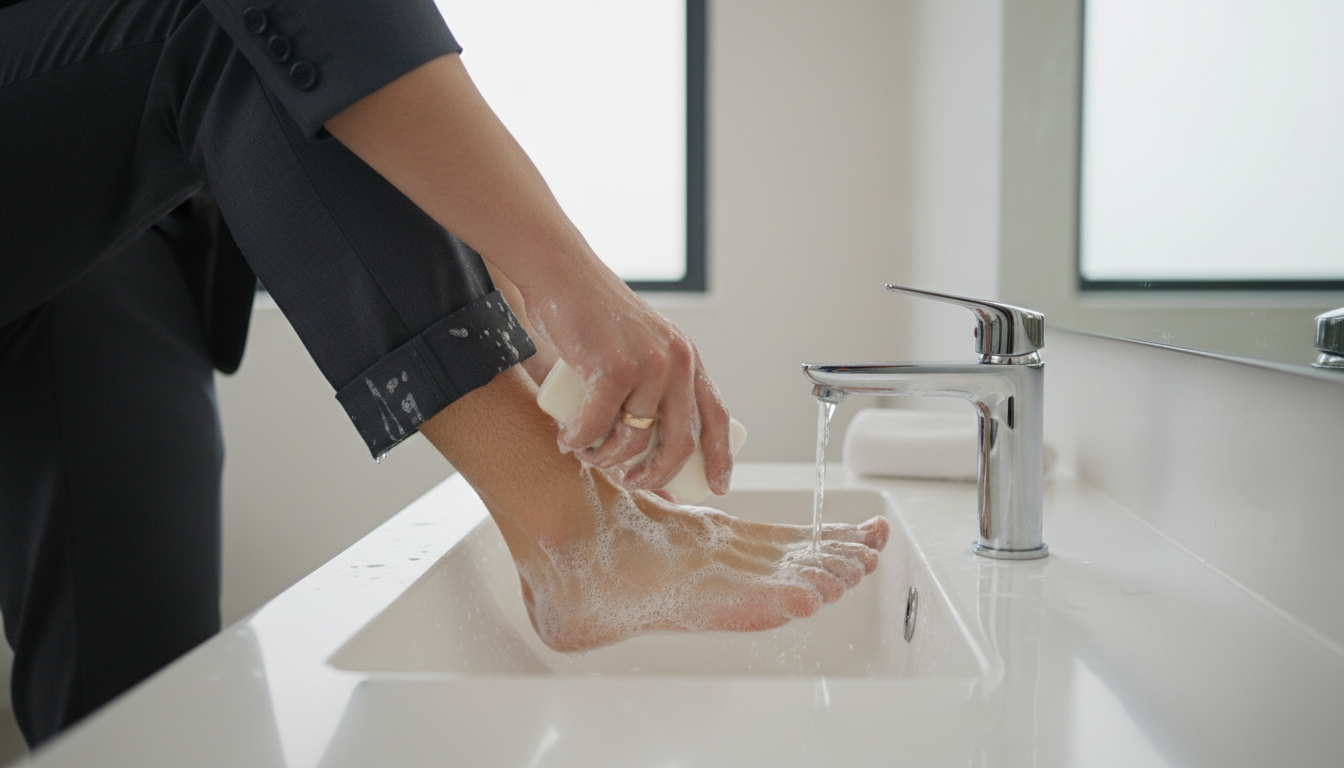
- Washing your feet with soap and clean water immediately after walking through waterlogged streets is critical to prevent leptospirosis.
- Avoid raw salads, cut fruits, and street food with unverified water sources during your office lunch breaks to prevent typhoid and gastroenteritis.
- Proper office ventilation with fresh outdoor air intake is much more effective at stopping respiratory infections than simply switching off the AC.
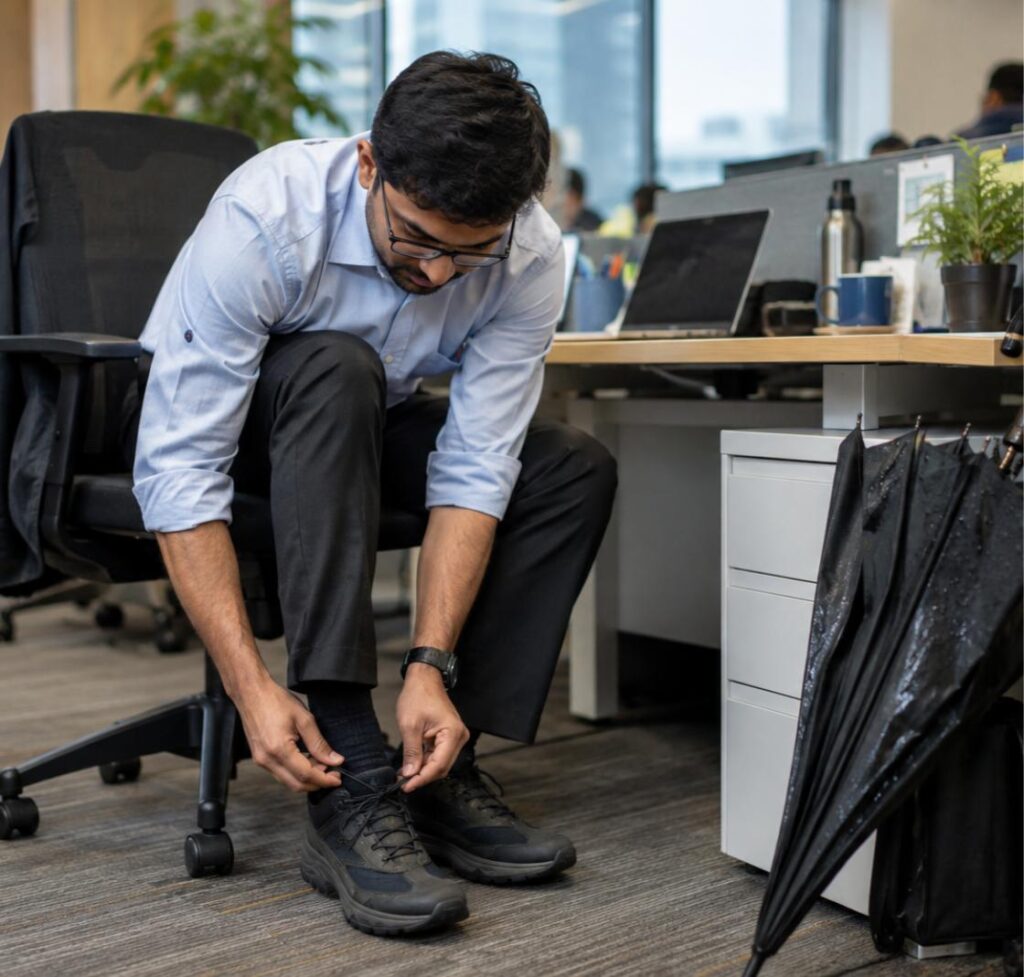
- Keep an extra pair of dry formal shoes and socks at your office desk to avoid sitting in damp footwear all day.
The Ground Reality: Why Working Adults Get Hit Hardest
Every year, our daily commutes and office spaces become high-risk zones for infections. The numbers are sobering. According to official data from the National Center for Vector Borne Diseases Control, India recorded over 2.33 lakh dengue cases in 2024. The World Health Organization has explicitly noted that India experiences extensive outbreaks linked to monsoon-related transmission.
But dengue is just one part of the story. For the daily commuter, leptospirosis is a hidden and severe threat. This bacterial infection is transmitted when floodwater contaminated with rodent urine comes into contact with even a tiny cut or cracked skin on your feet. Medical experts warn that daily commuters crossing waterlogged streets are highly vulnerable, and prompt medical advice within a 24 to 72-hour golden window after exposure is absolutely crucial.
Add to this the fact that we spend eight to ten hours a day in sealed, air-conditioned rooms, sharing recirculated air with colleagues who are coughing but refuse to take a sick day due to our toxic presenteeism culture. Acknowledging and understanding these specific commuter risks is the foundation of monsoon office illness prevention india.
The “Immunity Booster” Trap vs. Real Prevention
Walk into any corporate cafeteria in July, and you will see colleagues sipping expensive herbal detox teas, popping vitamin C gummies, and discussing the latest “immunity booster” shots. While basic nutrition is always important, these supplements give a false sense of security.
Small, deliberate daily choices—like washing your feet after a flooded commute, avoiding that roadside chaat, or advocating for better office ventilation—matter infinitely more than any expensive immunity supplement.
No amount of herbal tea will protect you if an Aedes mosquito breeds in the stagnant water of your office’s AC drip tray and bites you under your desk. Real prevention is about controlling your immediate environment and your daily habits. Let us break this down into a practical, five-pillar defence strategy.
Pillar 1: Commute and Wet-Shoe Hygiene
Your feet are the most exposed part of your body during a monsoon commute. Wading through muddy puddles outside the railway station or office gate is sometimes unavoidable, but how you handle it makes all the difference.
- Wear closed footwear: Ditch the open sandals. Wear waterproof shoes or sturdy sneakers during your commute. Keep your nice formal leather shoes safely tucked away in your office drawer.
- Cover your cuts: If you have a visible cut, scratch, or cracked heels, cover them with waterproof dressings before leaving home.
- The 5-Minute Washroom Rule: Do not just reach the office, wipe your feet with a tissue, and put on dry socks. The moment you reach your workplace, head straight to the washroom. Wash your feet and legs thoroughly with soap and clean water, paying special attention to the spaces between your toes. Dry them completely before putting on your office shoes. Damp skin is a breeding ground for fungal infections like athlete’s foot.
- Watch for the Leptospirosis Window: If you had to wade through knee-deep or foul-smelling water, monitor yourself closely. If you develop a sudden fever, severe muscle pain (especially in the calves), or red eyes within a few days, see a doctor immediately and mention your floodwater exposure.
Pillar 2: Food and Water Safety at Work
Waterborne diseases like typhoid, hepatitis A, and severe gastroenteritis spike violently during the rains. The shared office pantry and the street food stalls outside your building are prime suspects.
During the monsoon, you must be ruthless about what you eat during office hours. Avoid cut fruits, raw salads, chutneys, and cold chaats like pani puri entirely. The water used to wash these raw items or make the ice is often compromised. Stick to freshly cooked, steaming hot food. A hot plate of idli, poha, or cooked dal and rice is significantly safer than a raw cucumber sandwich.
The best strategy for a busy professional is to pack your own lunch. Cook a little extra dinner the night before and pack the leftovers safely. Keep a stash of roasted chana, dry fruits, or packaged biscuits in your desk drawer so you are not tempted to grab a questionable samosa from a roadside vendor when the 5 PM hunger pangs hit during a downpour.

Pillar 3: Mosquito Control in the Workplace
We often assume that facility management is taking care of mosquito control in our office buildings. But the Aedes aegypti mosquito, which transmits dengue and chikungunya, breeds in tiny collections of clean, stagnant water.
During your coffee breaks, do a quick visual scan of your surroundings. Are there plant pot trays holding water in the lobby? Is the AC condensate tray dripping into a stagnant puddle in the basement parking? The Union Health Ministry’s revised monsoon preparedness guidelines heavily emphasise source reduction and vector management. If you spot stagnant water, take a photo and escalate it to your HR or admin team immediately.
On a personal level, wear long-sleeved shirts and trousers during peak monsoon weeks, especially if your office is located near a construction site or a heavy green belt. Keep a small bottle of mosquito repellent lotion at your desk and apply it around your ankles.
Pillar 4: Indoor Air Quality and AC Rules
There is a common myth that the office AC “gives you a cold” and should be switched off during the monsoon. The reality is that turning off the AC and sitting in a sealed, stuffy room with only fans recirculating the same air is actually worse for viral transmission.
The real issue is a lack of fresh air. CSIR guidelines for building ventilation recommend a minimum fresh air ventilation rate of 10 litres per second per person. Properly managed air conditioning that brings in outdoor air, maintains a temperature between 24–30°C, and keeps relative humidity between 40–70% is actually protective.
Addressing indoor air quality is a non-negotiable part of monsoon office illness prevention india. If you are stuck in back-to-back meetings in a small conference room, leave the door slightly ajar to allow for cross-ventilation. If your office has openable windows, request the admin to air out the floor early in the morning before the AC is turned on full blast.

Pillar 5: Smart Fever Decisions (When to Stay Home)
The “hustle culture” mindset tells us to pop a Dolo, grab a coffee, and power through a workday even when we have a fever. In the monsoon, this behaviour is reckless. It delays your own diagnosis and spreads infections to your entire team.
If you have a fever of 38°C (100.4°F) or higher, stay home. Do not self-medicate with paracetamol for more than two days without seeing a doctor. Medical emergencies arising from neglected dengue or leptospirosis can drain your finances rapidly, which is exactly why I constantly advise my readers to build a solid emergency fund for Indians.
Watch for red-flag symptoms: severe muscle pain, extreme weakness, difficulty breathing, yellowing of the eyes (jaundice), or reduced urine output. These are signs that you need urgent medical care, not another day of answering emails from your bed.
| Common Monsoon Myth | The Ground Reality |
|---|---|
| “It is just a harmless viral fever, I can go to work.” | Monsoon fevers can be early signs of dengue, malaria, or leptospirosis. Rest and monitor for red flags. |
| “Office canteen food is completely safe.” | Only if they use treated water. Raw salads and chutneys remain high-risk even in corporate cafeterias. |
| “Switching off the AC stops the spread of cold.” | A sealed room without fresh air exchange spreads viruses faster. Proper ventilation is the actual solution. |
| “Drying my wet feet with a towel is enough.” | You must wash with soap and clean water to remove bacteria like Leptospira from floodwater exposure. |

Frequently Asked Questions
Is every monsoon fever in a city like Mumbai or Bengaluru dengue or leptospirosis?
No, many fevers are simply common seasonal flu or mild viral infections. However, because vector-borne diseases spike heavily during the rains, you cannot afford to be complacent. Any fever lasting more than 48 hours, or accompanied by red-flag symptoms like severe body pain or breathing issues, must be evaluated by a doctor.
I walk through ankle-deep water in my commute once or twice a week. Should I be worried?
Yes, repeated exposure to stagnant or sewage-mixed water is a recognised health risk, particularly if you have cracked skin on your feet or underlying conditions like diabetes. Minimise exposure by wearing closed shoes, wash your feet vigorously with soap upon reaching your destination, and seek medical advice if you develop a sudden fever within a few days of exposure.
I am vaccinated for typhoid and hepatitis A. Can I relax about food hygiene?
Vaccines are an excellent line of defence, but they only protect you against those specific diseases. They do not protect you from cholera, E. coli, norovirus, or leptospirosis. Basic food and water hygiene—avoiding raw street food and unverified water sources—remains absolutely essential during the monsoon.
What is the most overlooked aspect of monsoon office illness prevention india?
Indoor mosquito breeding and poor ventilation. We worry a lot about getting wet in the rain, but we ignore the Aedes mosquito breeding in the office plant pot next to our desk, or the fact that we are sitting in a sealed, unventilated meeting room with three coughing colleagues for two hours.
Final Thoughts
Ultimately, monsoon office illness prevention india is about controlling what you can. You cannot control the municipal drainage systems, the waterlogging on the roads, or the fact that your manager scheduled a mandatory in-person meeting on a day with a red alert for heavy rain. But you can control your footwear, your immediate personal hygiene, what goes into your mouth during lunch, and how quickly you respond to a fever. Stop relying on quick fixes and start treating your daily health habits with the same seriousness and discipline you apply to your career and investments. Stay safe, stay dry, and do not hesitate to take that sick leave when your body demands it.
If you truly read till here, I know you are serious about changing something.
Tell me in the comments: which part of this feels most relevant or confusing for your current situation, and what is one step you are taking this month?
Leave a comment below – I genuinely read them, and your question might also help someone else facing the same situation.

Abhishek Sikka writes for Indian working adults who want better health habits and safer money decisions. He shares practical lessons from his own lifestyle changes and years of market experience, with a focus on realistic routines, clear thinking, and long-term progress over extremes.
Discover more from
Subscribe to get the latest posts sent to your email.